At a glance
These were the places where Tyre turned sailing ships into contracts and city power. Long rows of storage rooms and open emporia on the quay held amphorae, bolts of dyed cloth, and sealed consignments that merchants, clerks, priests, and captains counted, weighed, and bound into agreements before a voyage left port.
What did Tyre do to make risky, long-distance trade reliable? The trade warehouses and emporia district answered that question through architecture, measurement, and paperwork. Along the main quay you would have seen stone plinths topped by wooden sheds: narrow rooms opening directly onto the dock, low platforms for stacking amphorae, and long benches where bolts of finished cloth were folded and re-folded. Doors were wide enough to slide a full amphora through; floors were packed earth or flagstones darkened by spilled oil and salt.
Ropes tied to iron rings ran from the quay into the warehouses; block-and-tackle systems lifted heavy jars and crates up and down. Amphorae were arranged in rows with their handles chalked or stamped; many bore lumps of clay or wax tags pressed with a seal to lock a consignment. Nearby, a scale arm balanced bronze weights with a sharp metallic clink while a clerk scratched numbers on a potsherd or wooden tablet. The smell at midday mixed salt, fish oil, tar, and the sharper tang of pressed dyes and mordants from cloth being finished for export.
The district looked like other Mediterranean emporia in its piled cargo and quay-side trade, but in Tyre those piled goods sat directly under the island’s ruling and ritual gaze. Warehouses were not a separate commercial quarter beyond civic reach; they lay on the approach to the palace and the temple of Melqart. That proximity meant that sealing, measuring, and approving consignments were as much public acts as private commercial ones: priests, royal agents, and merchant partners all had reasons to be present when a cargo was weighed and stamped.
Understanding this place changes how you see the city because it reveals where value was made visible and made trust. Tyre’s power was partly naval and partly bureaucratic: ships carried the reach, but the warehouses converted goods into legally recognized, transportable claims. When the sea lane closed, it was not only ships that were trapped; those claims and the city’s ability to underwrite far-flung partnerships were disrupted as well.
Closer looks
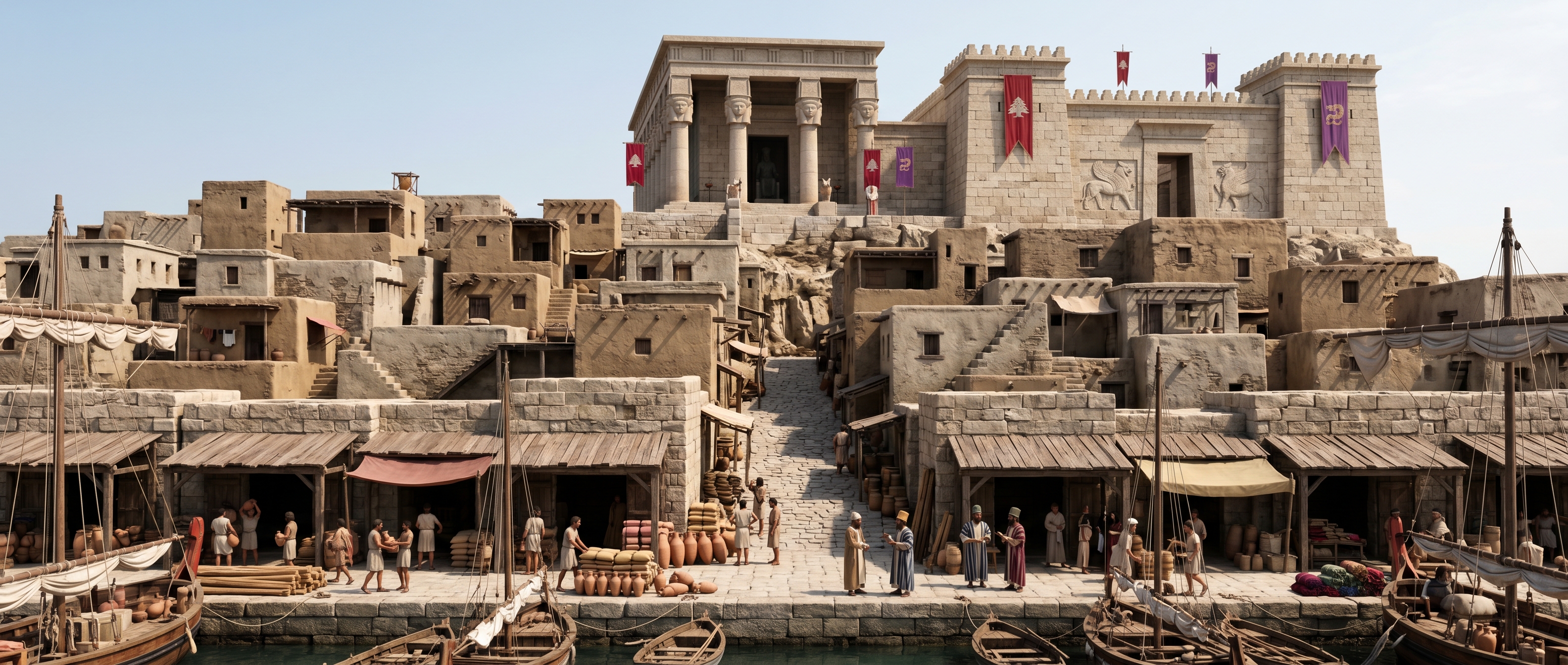
Melqart and the palace looking down on the warehouses
Power in Tyre read from top to bottom: the temple and palace perched above the quay turned everyday loading into a public, sanctified act. From the harbor a visitor would have seen steps and columns rising directly over the warehouses, so that seals were inspected and oaths taken within sight of the cult statue of Melqart.
That vertical arrangement mattered because authority was visible as well as legal. Royal banners and carved reliefs at the palace entrance announced which consignments held privileges or were crown property. Priests and palace agents often stood near the dock when convoys departed, and their presence could speed a shipment’s passage or restart a stalled claim; leaving without that witness risked disputes that a distant buyer might not honor.
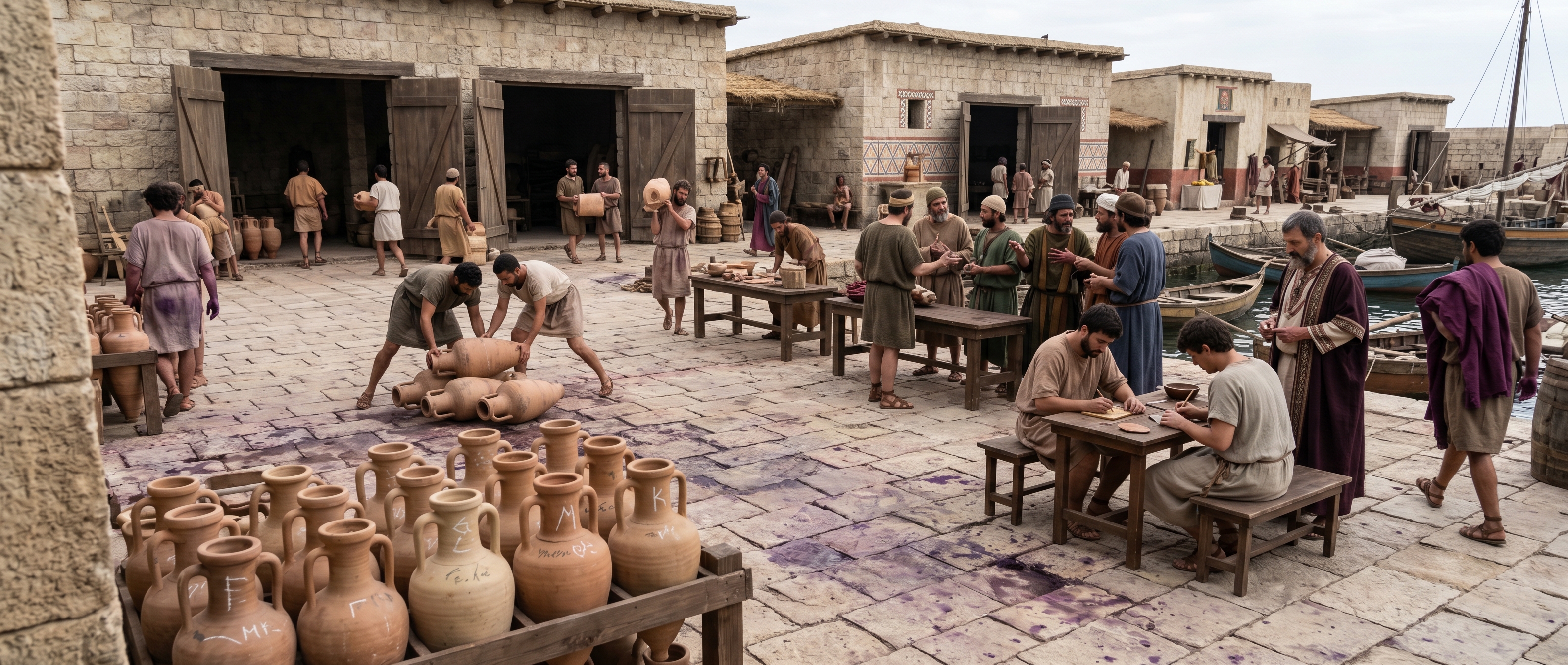
Quay-side loading and the emporia benches
The quay was where weight, origin, and price were made legible through quick choreography rather than mystery. Amphorae sat on low plinths with chalked marks that recorded capacity, origin, or consignee; benches hosted arguments, short-term loans, and the scratching of receipts onto potsherds or wax tablets as cargo moved from ship to warehouse.
Loading was efficient because it was routinized. A common amphora held roughly 20–30 liters, so stacking a few dozen meant tons of oil, wine, or dye-ready liquid were being marshalled in a single morning. You would have heard the clink of bronze weights, the scrape of pottery, and the barked counts of porters coordinating the next sling.
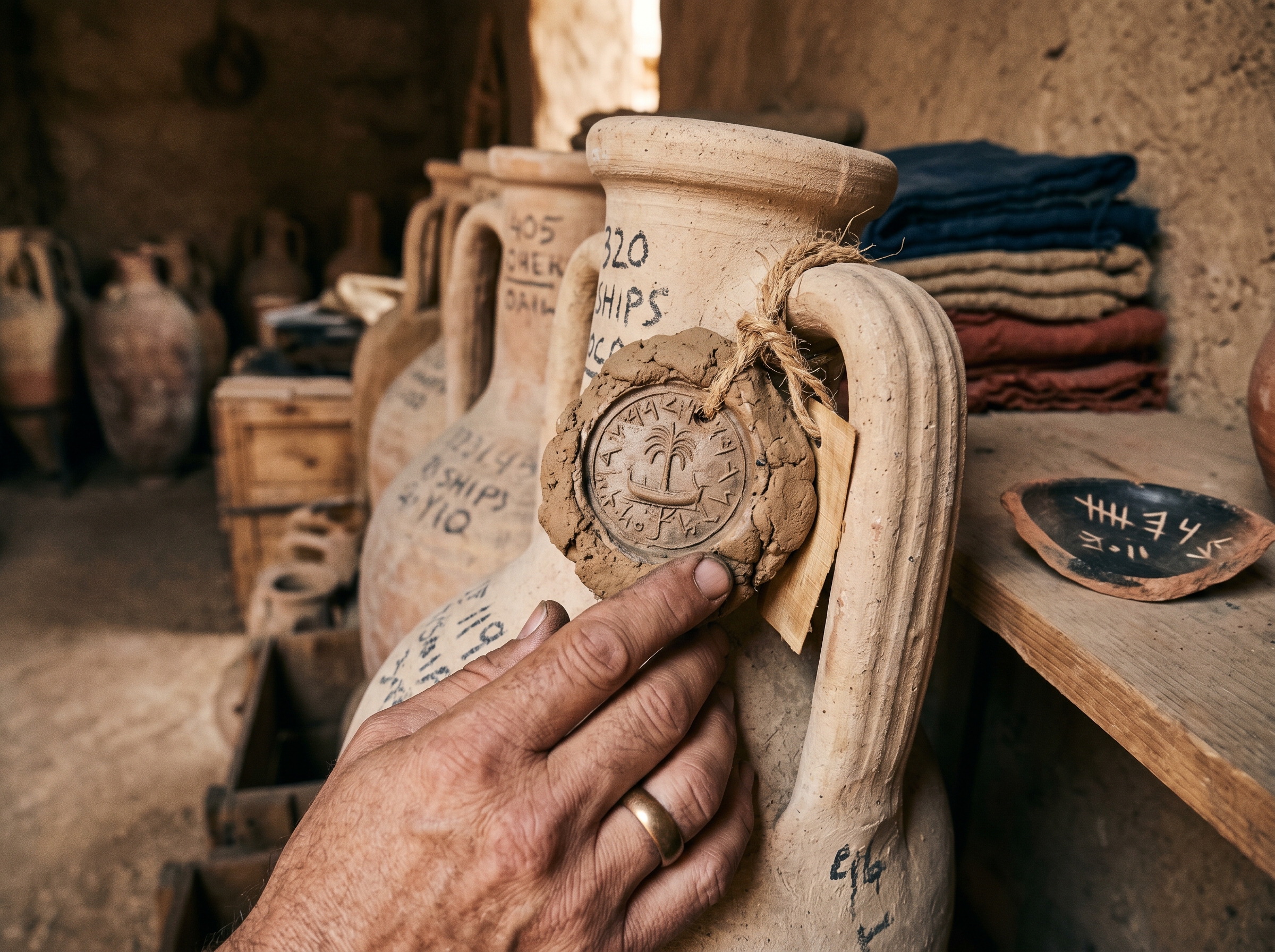
Close-up of amphora handles with clay seals and tags
Small lumps of clay and wax did a disproportionate amount of legal work in Tyre. A pressed seal on an amphora handle functioned both as a signature and a tamper-evident lock: if the impression matched the ledger’s notation, a buyer could trust origin and ownership across seas and months.
Seals were deliberately plain, not royal heraldry; merchants, temples, and city agents kept stamp matrices and used the same impressed motifs repeatedly, so wear and partial matches could be read by experienced clerks. Threads or leather strips bound tags to handles, and nearby potsherds often carried the corresponding entry that tied a physical mark to a written record.
Seal impressions paired with potsherd tallies like an early shipping label plus security system.
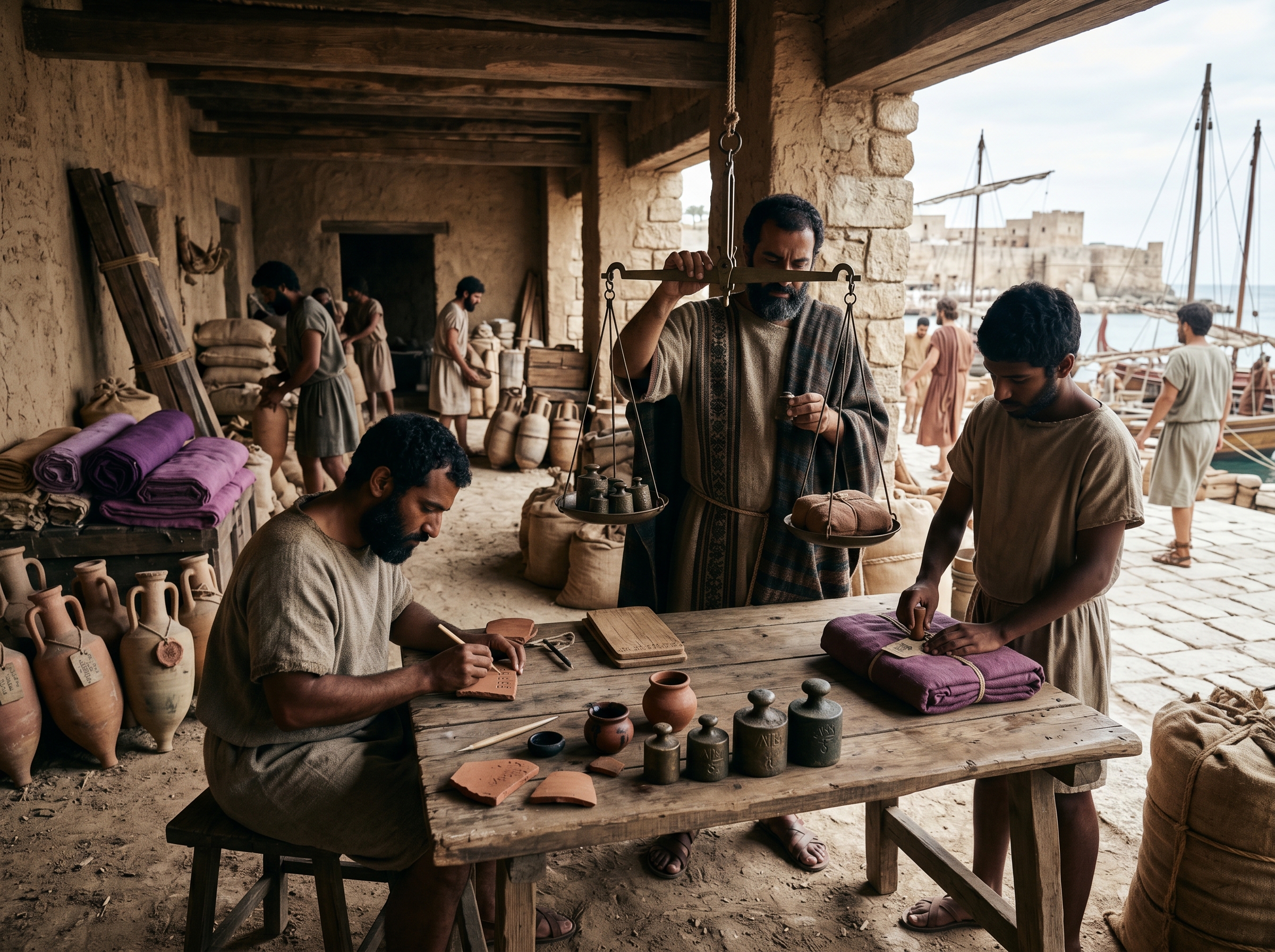
Ledger-scribe and scale at an emporium bench
Weighing and sealing converted messy cargos into enforceable claims, and that process moved slowly because accuracy mattered. A clerk balanced a beam scale with standardized bronze weights while a second attendant prepared a clay tag; their tallies were recorded on tablets that could be produced in court or before temple arbitration.
Those clerks were not neutral bystanders. Many acted under temple or royal authority; their tallies carried weight because their offices were recognized by buyers and allies. Disputes over short differences in weight were common, so weights were kept in secure boxes and sometimes verified by a priest before a convoy left.
Scales and standardized weights were stored under official supervision so a ledger-scribe’s tally could be trusted across distances.
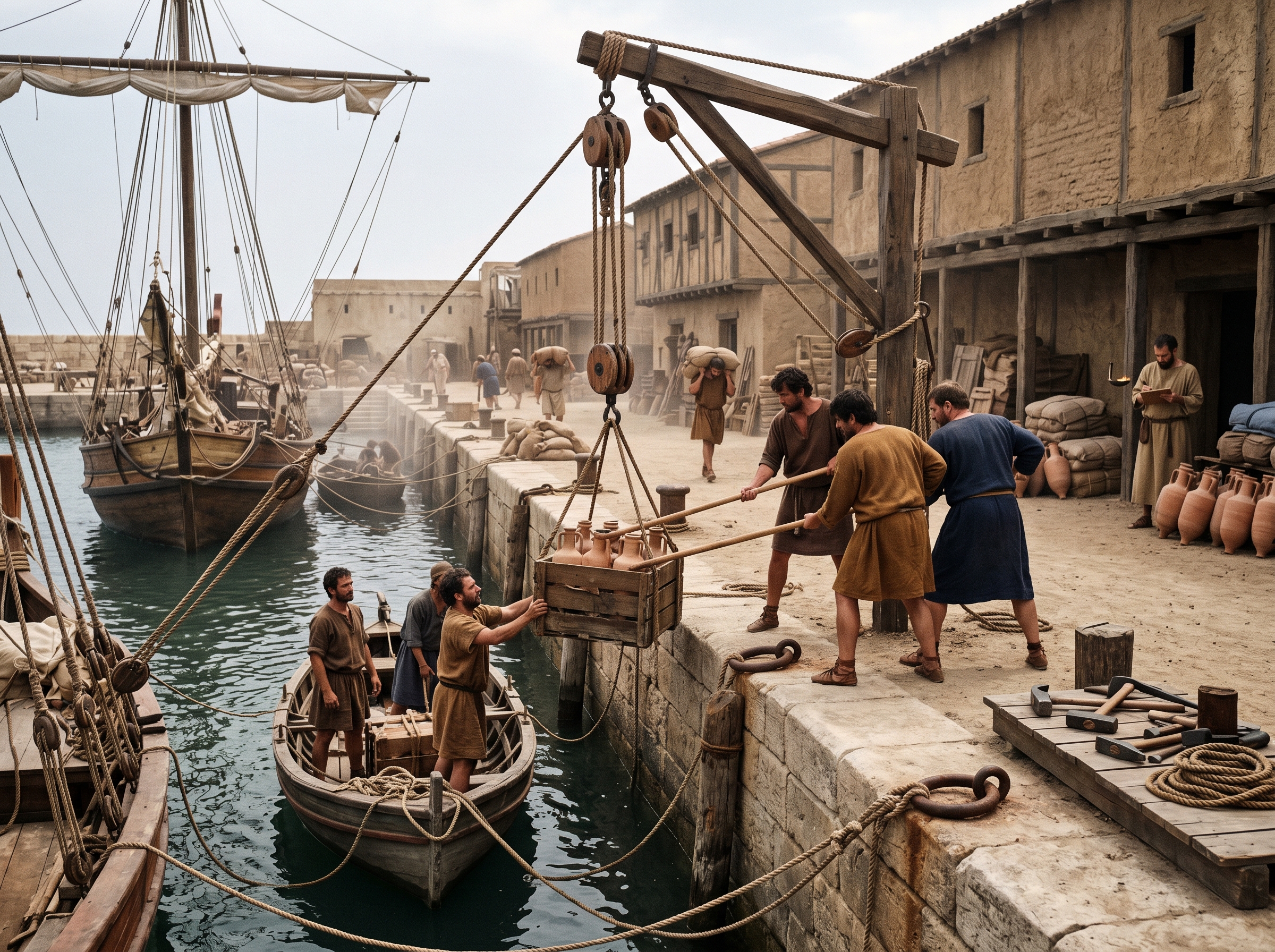
Block-and-tackle and ropes lifting amphorae from ship to quay
Moving heavy amphorae from ship to shore required simple engineering and coordinated muscle. Multi-part block-and-tackle rigs ran from ship davits to iron rings set into the quay, and teams of porters steadied suspended crates with long poles while lighter skiffs ferried goods to the slip for hoisting.
The hardware told of constant use: ropes were frayed where they rubbed against rings, and grooves in iron fastenings recorded years of strain. Because larger merchant hulls often could not come alongside shallow quays, small lighters were integral — the sea leg of a single cargo could involve three vessels and half a dozen formal handoffs before a jar reached the warehouse floor.
Iron rings and grooved beams on the quay showed where decades of hoisting left a physical record of trade.
City context
The warehouses and emporia sat directly along Tyre’s principal quays, the first urban layer a sailor met before the narrow spine rose to the palace and the temple. Ordinary Tyrians passed through the district daily: dockworkers hauling jars, rope-makers bringing fresh coils for lashings, dyers bringing out bolts of cloth to be inspected or packed. Sailors traded gossip and short-term loans at the emporia benches; captains inspected seals while priests or royal agents verified consignments before a convoy put to sea.
Ceremony threaded through routine. Departing convoys often paused for an oath at Melqart; that ritual sanctified agreements whose physical records were produced in these same buildings. Tribute payments, official shipments to allied courts, and private consignments were all processed here, so the district was where diplomacy, religion, and commerce met. When storms or war threatened the sea lane, the quay’s activity fell away first — not merely a loss of income, but a breakdown in the city’s capacity to turn goods into enforceable claims and cross-border partnerships.
Sources
essay
- City essay: Tyre (1000–100 BCE) — Island heart, harbors, and the sacred-commercial regime
book
- Maria Eugenia Aubet, The Phoenicians and the West: Politics, Colonies and Trade (2001)
- Glenn Markoe, Phoenicians (2000)