At a glance
The Temple of Melqart was the ritual engine that turned maritime risk into civic order: crews swore, merchants sealed deals, and colonists received blessings before they left Tyre. Physically it dominated the island—a stepped sanctuary and broad forecourt looking down on quays and shipyards—so religion and commerce were not separate realms but overlapping stages of the same enterprise.
What did it mean for a city to put its temple at the same high point that watched its ships? The Temple of Melqart answered that question every time a captain stepped out of the harbor onto the temple forecourt and swore by the god before leaving. The complex sat on a raised stone platform crowning the island; a wide flight of steps gave access from the spine of the town, and a broad plaza opened toward the main quays so that the temple faced the very place where cargoes were loaded and crews mustered.
The architecture invited public performance. A colonnaded approach and a paved forecourt provided room for hundreds to stand, watch, and participate: sailors in tarred cloaks, merchants with sealed bundles, a handful of priests moving between altars and the hidden inner shrine. The inner room would have held a monumental cult image of Melqart—an object acted on, touched, and swore by—while altars outside handled libations and animal offerings. From the harbor the temple read like a device for concentration: processions climbed its steps; oaths and dedications were visible to those still aboard ship.
Seen in the Mediterranean frame, the temple worked like the sanctuaries of Corinth or Rhodes in that it bound shipping to ritual. It differed in one critical respect: its proximity to the royal palace made divine sanction a tool of governance. Kings and priests routinely overlapped in duties that regulated who could export, which convoys received protection, and which private ventures gained official blessing. That mix of crown, cult, and commerce made Melqart not a remote god but a civic mechanism for ordering risk.
The most important question the temple raises is practical: how did a ritual space produce economic power? Physical details answer it. The forecourt’s size made oaths public and enforceable; the temple’s high position made its rituals visible from sea, giving them performative weight; and its role in departure rites turned individual voyages into matters of civic concern. Understanding the temple reshapes Tyre: the city was not merely a collection of shops and docks but a sanctified hub where religion licensed and regulated long-distance trade and colonization.
Closer looks
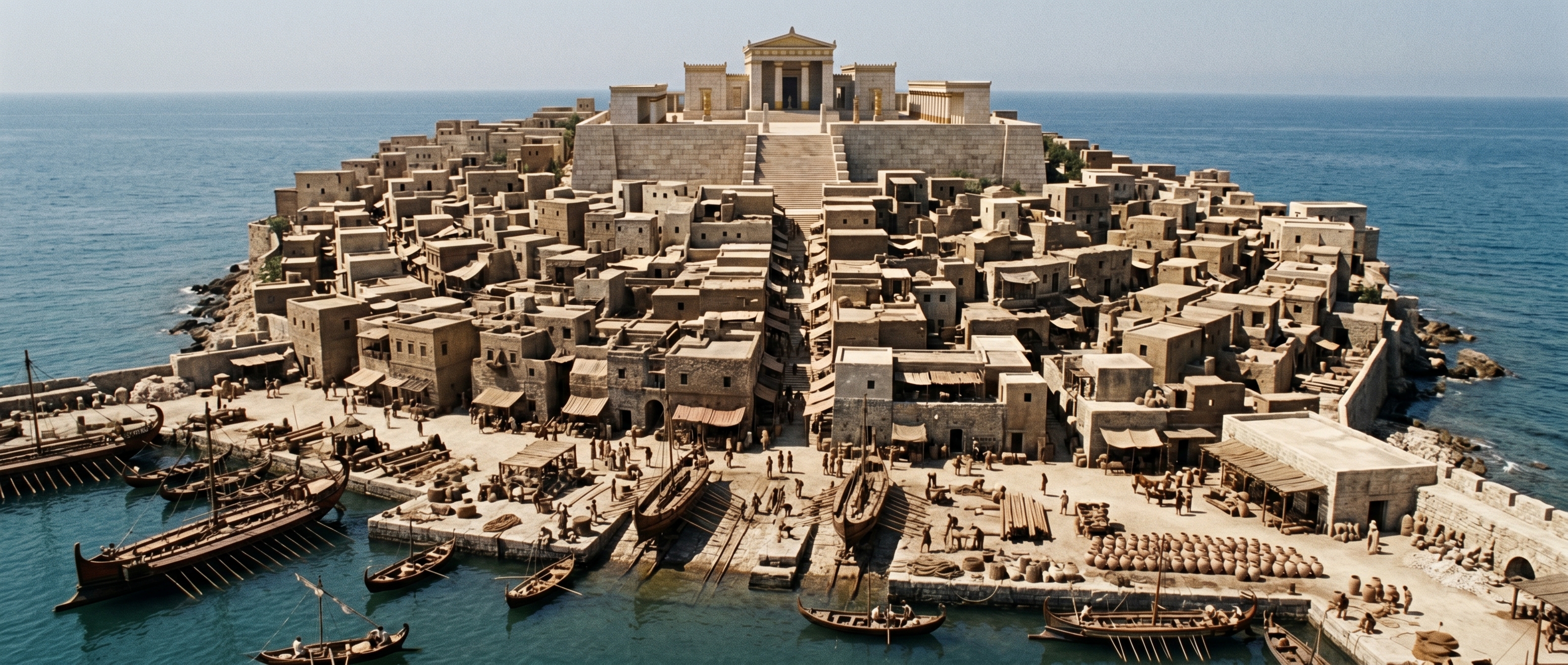
From the main quay: island spine rising to the temple
The island’s temple acted like the city’s headline—visible from the quays and readable as a piece of civic information. The raised stone platform and broad forecourt crowned a narrow spine of warehouses and emporia that climbed directly from the main quay, so an arriving captain stepped off his boat into an urban sequence that ended at a sacred stage.
Shipyards and slipways pressed into the waterfront below: timber stacks, ropewalks, and men hauling keel timbers. Long vats for processing murex sat near the shore, their pale shell-middens piled into hummocks that caught the light. Small boats bobbed beside larger merchant hulls whose crews clustered on deck, watching the steps of the island rise to the temple. From a distance the temple’s roofline worked as practical information—where to berth, where legal and ritual redress could be found—and as an architectural capstone that tied the harbor’s industries to royal and priestly authority.
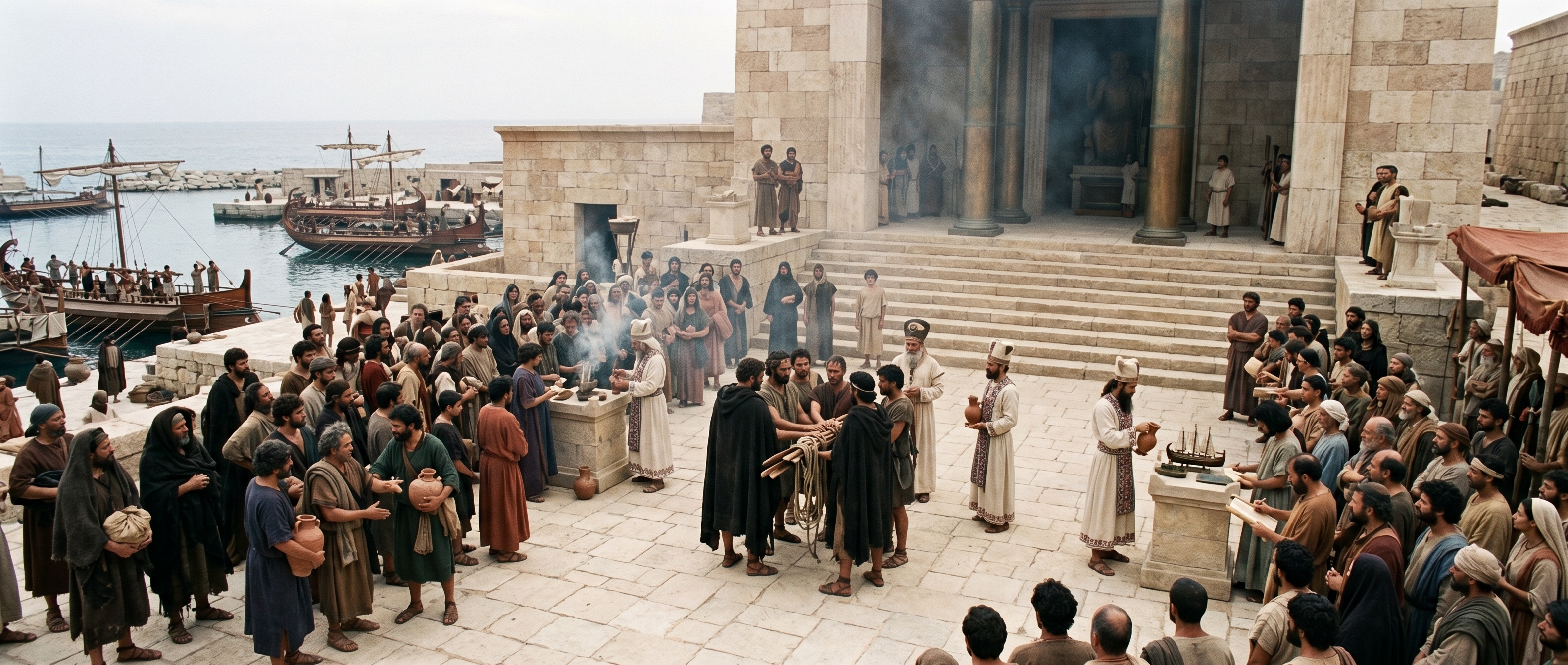
Departure rites on the temple forecourt
The forecourt turned private transactions into public obligations. Sailors, merchants, officials and scribes packed the paved plaza so that an oath or dedication was witnessed, recorded, and therefore enforceable beyond the individuals involved.
Priests moved among clusters of men in tarred cloaks and porters with sealed bundles. Portable altars bore bowls for libations; ropes and oars were laid beside miniature ship dedications and inscribed tags that functioned like contractual receipts. The harbor yawed below, and participants glanced toward their vessels as priests pronounced names and poured wine. Temple scribes often noted departures on tags or tablets that could be called forward in disputes; a vow on the forecourt therefore carried the weight of public record as much as of piety.
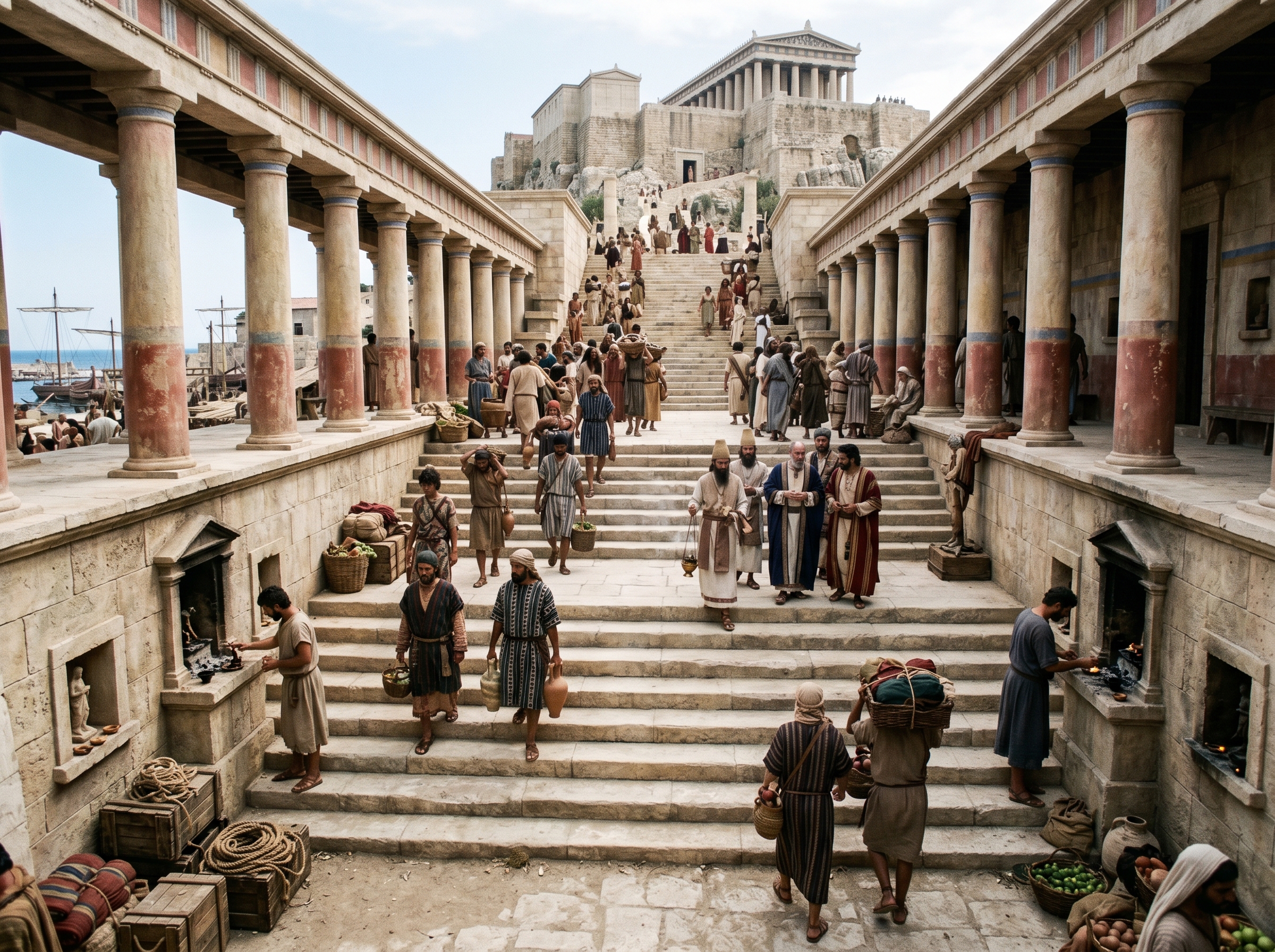
The colonnaded approach and monumental flight of steps
The approach choreographed movement so that commerce read like ceremony. A monumental flight of broad stone steps and a pillared walkway channelled porters, officials, and priests into a single, visible procession up to the shrine.
Steps showed well-worn edges from constant traffic; low retaining walls and side ramps allowed pack animals and carts to be led partway up. Niches and small altars set into the approach offered places for quick offerings or to leave a votive before proceeding. Hooks and shallow recesses hinted at everyday use—temporary storage, ropes tied off, bundles rested—so the route was both functional and formal. As merchants climbed with bolts of dyed cloth and ship timbers, the architecture turned routine movement into a staged assertion of the temple’s authority over trade.
Wear on the steps and practical fittings made the procession route both a ceremonial ramp and an everyday logistics corridor.
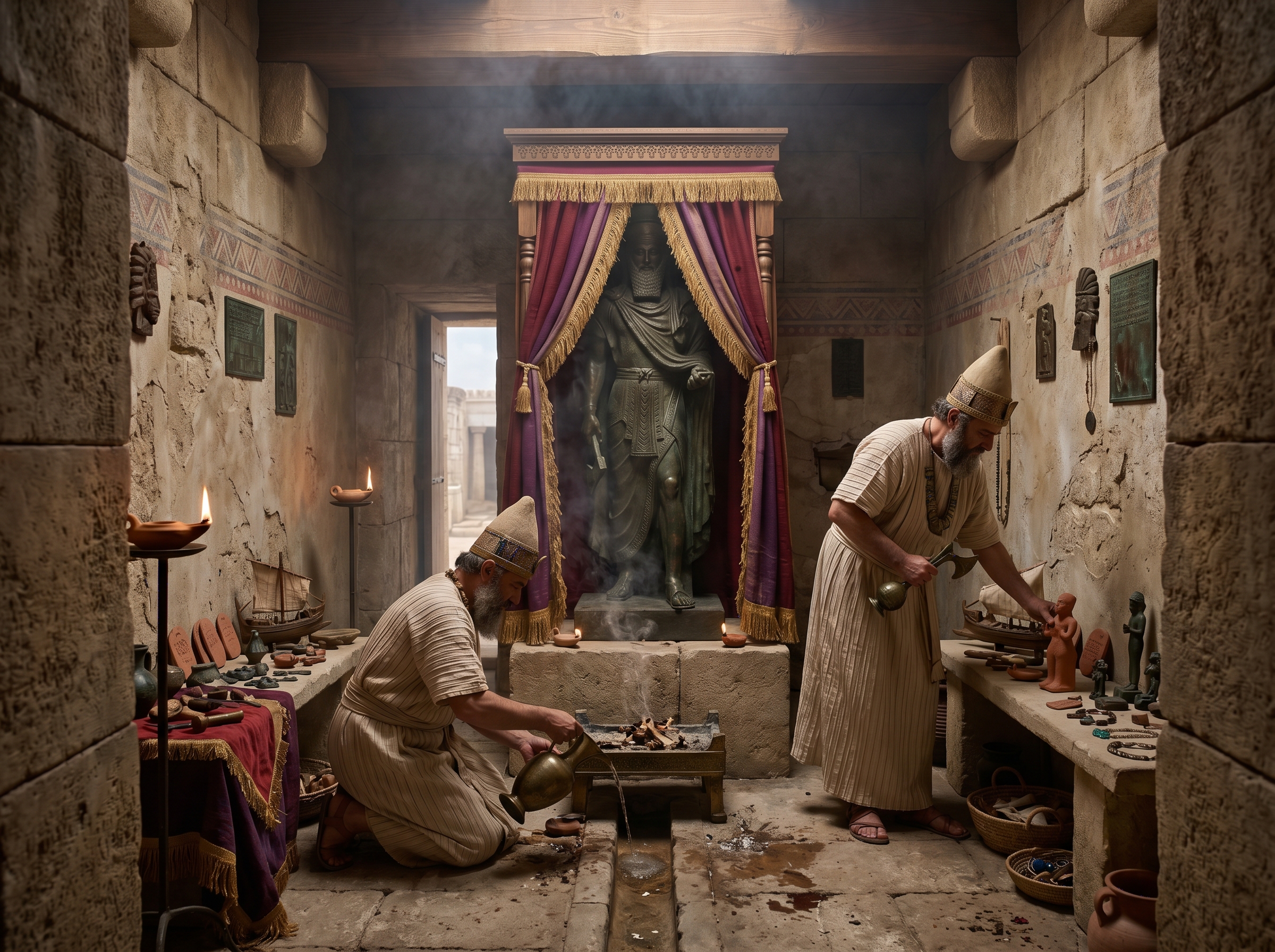
The inner sanctuary with Melqart’s cult image
The inner chamber concentrated authority into a single, partly concealed object that people swore by. The cult image sat on a raised plinth behind a narrow doorway; only priests approached it fully, while most petitioners touched a threshold or an object brought out for the rite.
Oil lamps threw a low, flickering light across a plinth with traces of resin and cloth that suggested periodic anointing or dressing of the image. Priests performed measured gestures—libations drained through small channels into basins, incense smoke curled under the lintel—and placed votive miniature ships and inscribed tags at the statue’s feet. The cult object functioned as both religious focus and legal witness: to touch it was to bind oneself in a way that temple records and royal protection could enforce. The chamber felt small and tight by design; the crowd’s oath was public outside, but the object that anchored that oath was kept deliberately restricted.
The cult image was protected and partly hidden; its physical seclusion made the public rituals on the forecourt legally potent.
City context
The temple occupied the island’s highest point and therefore the city’s most visible pulpit. From the main quay a visitor moved along a narrow urban spine past warehouses and shipwright slips to reach its steps. That route meant ordinary transactions ended within sight of a sacred stage: a merchant bargaining over bolts of dyed cloth was only a few minutes’ walk from the place where the same cloth’s departure would be ritually secured.
Everyday life met ceremonial life here. Sailors came to touch the cult image, priests recorded departures and pronouncements that affected convoy protection, and the king’s envoys negotiated privileges under the god’s name. Annual and seasonal rites—departure blessings before trading seasons and special ceremonies when colonists set out—punctuated the working year so that the temple’s calendar structured provisioning, shipbuilding, and the timing of voyages. When the sea lane was cut off and the island’s isolation ended, those rhythms were among the first things to change; what had been a sacred-commercial nexus became a different urban geometry.
Sources
essay
- City essay: Tyre (1000 BCE – 100 BCE) — island acropolis, harbours, specialized crafts, and the relationship of temple and crown
metadata
- Landmark metadata: Temple of Melqart — role in oaths, departure rituals, and civic sanctuary